

Winter Frosts and Vine Pruning: The Vigilant Awakening of Domaine Père Auguste
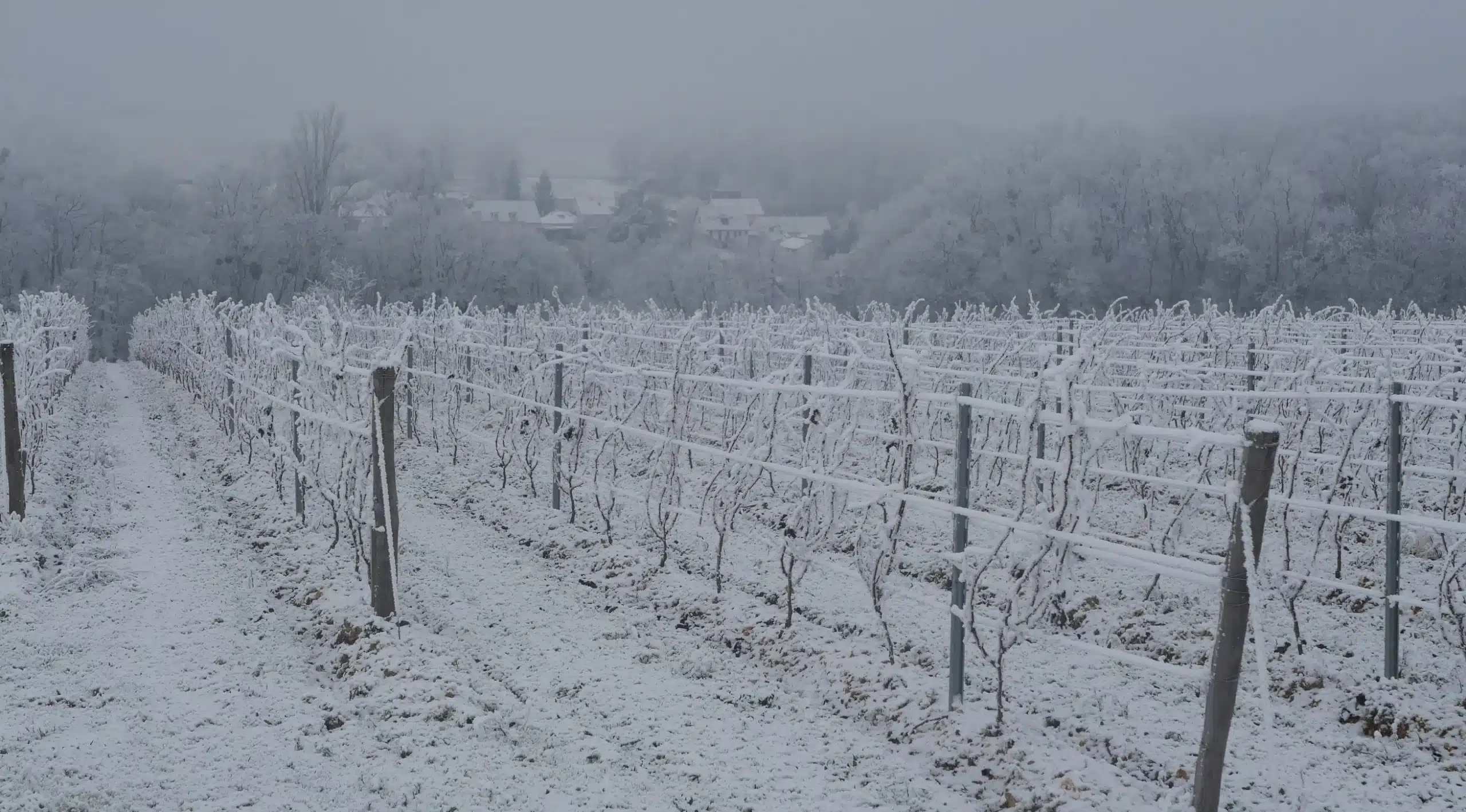
As the cold settles on our hillsides and the vines seem dormant, a crucial activity is in full swing at Domaine Père Auguste: pruning. But this year, as is often the case in Touraine, an unwelcome guest has arrived: winter frost.
While the sight of frosted vine shoots is magnificent, it demands constant vigilance from the winemaker.
Deciphering a delicate balance between protecting the plant and preparing for the future harvest.
The Dormant Vine: A Natural Resistance to Cold
During winter, the sap descends into the roots. This is called dormancy. At this time, the vine is incredibly robust: it can withstand temperatures as low as -15°C or -20°C without major damage.
It is precisely this cold that allows us to begin pruning. By pruning the previous year’s wood, we select the future buds that will produce the grapes for the next harvest.
Why fear frost during pruning?
While the vine is quite resistant to intense cold in the heart of winter, the danger arises during temperature fluctuations. Here are two key points for our teams to be aware of:
-
Wound drying after pruning: A very dry, windy frost immediately after pruning can cause the sap to “withdraw” and weaken the developing bud.
-
Early arrival of mild weather: If January is too mild, the sap rises prematurely (“the vine’s weeping”). If a severe frost occurs at this time, the waterlogged tissues burst.
Did you know? At Domaine Père Auguste, we adapt our pruning schedule according to the age of our vines and their exposure, in order to minimize the risks associated with adverse weather conditions.
Our winemaking tips to protect the future vintage
To counter the effects of frost and guarantee the quality of our Touraine wines, we apply several principles of sustainable viticulture:
-
-
Late pruning: On the most frost-prone plots, we wait until the last possible moment to prune. This delays bud break (the opening of the buds) and often helps avoid spring frosts, which are far more devastating.
-
Respecting the sap flow: We practice respectful pruning that limits large cuts, allowing the vine to heal better despite the cold.
- Observing the weather: The winemaker’s craft is above all a craft of patience and weather observation.
-
Conclusion: A blessing in disguise?
Despite the drawbacks, winter frost has its benefits. It helps to cleanse the soil and naturally regulates the populations of certain parasites. This is the natural cycle we respect at the estate to offer you authentic wines.
Want to discover the result of our work? Come visit us at the estate to taste our latest vintages or browse our online shop.